Workshop Method – Modern Kintsugi

Tools and materials:
- Broken ceramic pieces
- Two-part epoxy glue
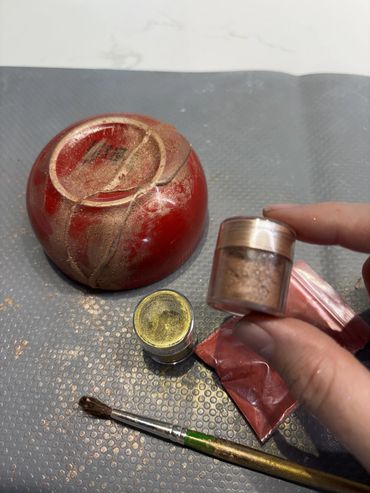
- Gold mica powder or gold paint
- Masking tape
- Toothpick or mixing stick
- Small brush (for sprinkling powder)
- Cotton swabs and acetone (for cleaning ceramics)
- Sandpaper or sanding sticks (to smooth surfaces)
- Gloves, mask and workspace cover
- Folded paper to collect mica powder
Basic steps:
1. Clean & Prepare
Carefully sand and clean broken edges and make sure the ceramic is dry.
2. Mix Epoxy
Mix equal parts of the epoxy glue according to the manufacturer’s instructions.
3. Apply Glue
Use a toothpick or wooden stick to apply a thin layer of glue to the broken edges.
4. Join Pieces
Press the pieces together and hold in place. Use masking tape for support while it sets.
5. Sprinkle Powder
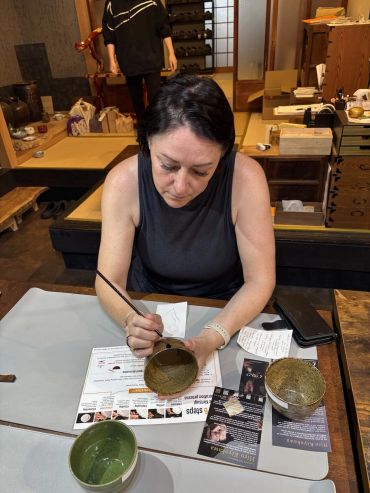
While glue is still tacky, use a soft brush to sprinkle gold powder along the join.
6. Let it Cure
Allow the epoxy to cure fully—usually 24 hours. Avoid moving or using the piece until fully set.
Helpful Video Demonstrations
🎥 Traditional Kintsugi Documentary (with English subtitles)
Watch on YouTube
🎥 Beginner Modern Kintsugi Tutorial
Watch on YouTube
Important notes:
- Repaired pieces using epoxy are for decorative purposes only — not food-safe or dishwasher-safe.
- Handle with care and keep away from heat or moisture.
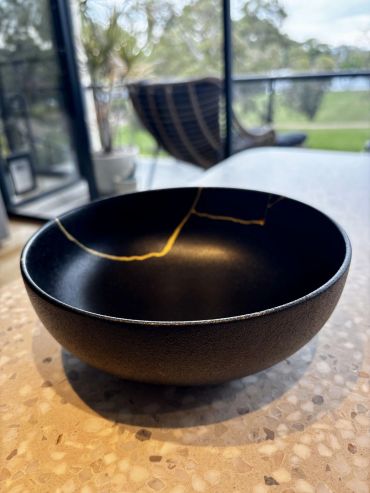
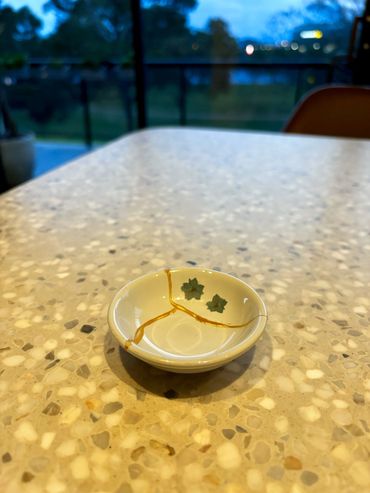
- Kintsugi is about the process, not perfection. Let go, take your time, and enjoy.
Want to Share Your Kintsugi Piece?
Tag us on Instagram @peacebypieceart or use the hashtag #PBPkintsugi to inspire others with your creative journey.