Our Saturday Studio Sessions are starting soon: Book Your Space Now!

Peace By Piece Art
Peace By Piece Art
  • Welcome
  • About Us
  • Gallery
  • Contact Us
  • Donate Now
  • Bookings
  • More
    • Welcome
    • About Us
    • Gallery
    • Contact Us
    • Donate Now
    • Bookings
  • Welcome
  • About Us
  • Gallery
  • Contact Us
  • Donate Now
  • Bookings

Peace By Piece - Sashiko Workshop Guide

MINDFUL MENDING WITH THREAD

What is Sashiko?

Sashiko (刺し子) means “little stabs” in Japanese — a reference to the small, even running stitches used in this traditional textile art. Originating as a practical form of mending, Sashiko has evolved into a beautiful, meditative craft that strengthens, decorates, and tells stories through cloth and thread.


At Peace by Piece Art, we embrace Sashiko not only for its heritage but for its calming, rhythmic qualities — offering a grounding, mindful practice that supports mental wellbeing.

How did it originate?

Origins: Sashiko originated in Japan over 400 years ago, mainly in rural farming communities. It was used to reinforce worn clothing and patch together fabric scraps to extend their life.
 

Philosophy:  Rooted in mottainai — the idea of not wasting what still has value — Sashiko honours sustainability, mindfulness, and the beauty of imperfection. 

Types of Sashiko

1. Moyōzashi (Pattern Sashiko)

  • Decorative stitching with repeating patterns
  • Common in modern designs and art pieces


2. Hitomezashi (One-stitch Sashiko)

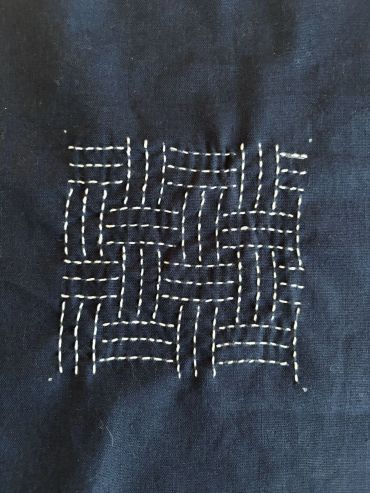
  • Grid-based stitching where individual stitches form patterns
  • Dense, textured, and often geometric


3. Functional Boro Repair 

  • Layering and mending with visible stitches
  • Historically used to extend the life of garments—now also seen as an artform

Workshop Method – Sashiko

Tools and materials:

  • Sashiko needle (long, strong, sharp)
  • Sashiko thread (cotton, non-divisible)
  • Fabric (Indigo cotton is traditional; any firm weave works)
  • Thimble (Sashiko-style palm thimble if possible)
  • Chalk or tracing paper (for marking patterns)
  • Pattern template or pre-printed fabric

Basic steps:

Start with Practice Stitches

Use our spare pieces of fabric to practice Sashiko stitching some straight lines before your start on your own piece.


YOUR PIECE

1. Choose a Pattern
Start with a simple geometric design (e.g. asanoha, seigaiha, or squares). You can draw it or use a pre-printed panel.


2. Mark the Design
Use white chalk paper or washable pencil to lightly transfer the pattern onto your fabric.
 

3. Thread the Needle
Cut your Sashiko thread (approx. arm’s length) and thread your needle. Tie a small knot at the end of the thread.
 

4. Begin Stitching
Use even, small running stitches, leaving the knot at the end of the thread, on the underside of the fabric (see video demonstrations below). Traditionally, stitches are twice as long as the spaces between them.
 

5. Load the Needle
Guide the needle through several points of the fabric at once before pulling the thread through. This helps keep the stitches even and steady.
 

6. Finishing Off
Leave a small tail of thread at the end or weave the end through stitches on the back.

Helpful Video Demonstrations

 🎥 Beginner’s Guide to Sashiko Stitching
Watch on YouTube


 🎥 How to Transfer Sashiko Patterns
Watch on YouTube


 🎥 Understanding the Meaning Behind Sashiko Motifs
Watch on YouTube

💡 Tips for a Peaceful Stitching Experience

  • Don’t worry about perfection — focus on rhythm and flow. 
  • Stitch in silence or with calming music to enhance mindfulness.
  • Use stitching time as a space to breathe, reflect, and reset.

Want to Share Your Sashiko Piece?

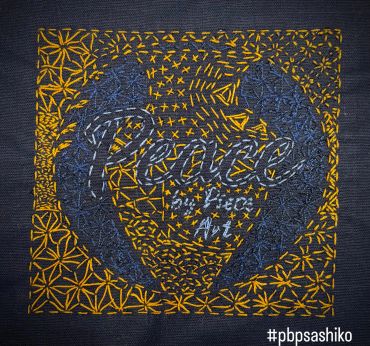
Tag us on Instagram @peacebypieceart or use the hashtag #PBPsashiko to inspire others with your creative journey.
  • Our Policies
  • Reports

PEACE BY PIECE ART

WA Charitable Collections Licence No: CC23697

Copyright © 2024, Peace By Piece Art. All Rights Reserved.

Powered by

This website uses cookies.

We use cookies to analyze website traffic and optimize your website experience. By accepting our use of cookies, your data will be aggregated with all other user data.

Accept