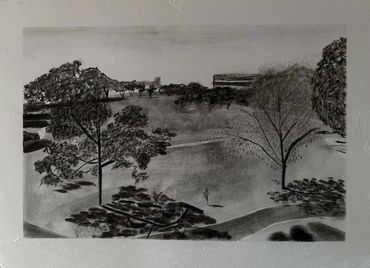
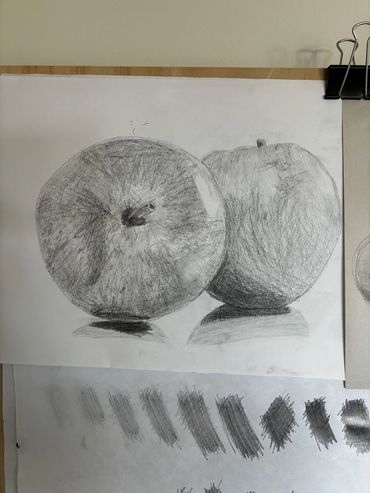
Workshop Method – Charcoal Drawing

Tools and materials:
- Charcoal (sticks, pencils, or powder)
- Drawing paper (cartridge, newsprint, or textured paper)
- Kneadable eraser (for lifting and shaping highlights)
- Blending tool (paper stump, sponge, or your fingers)
- Fixative spray (optional – to preserve your drawing)
- Scrap paper (to rest your hand on while drawing) or gloves (optional)
Basic steps:
1. Prepare Your Space
Lay down newspaper or a mat. Charcoal is messy — embrace it!
2. Warm Up
Make big, loose marks on the paper — swirls, lines, smudges. Try drawing with your eyes closed or with your non-dominant hand.
3. Build Layers
Start light. Sketch basic shapes or shadows using willow charcoal. Then deepen areas with compressed charcoal.
4. Blend & Smudge
Use your fingers or a blending tool to soften lines and create depth.
5. Lift Highlights
Use a kneadable eraser to dab or “pull” light areas from your drawing.
6. Add Contrast
Reapply darker strokes where needed. Explore hard vs soft edges.
7. Reflect
Step back and notice how your body feels. Charcoal drawing can be a journey in mood, memory, and motion.
Helpful Video Demonstrations
🎥 Charcoal Drawing for Beginners
Watch on YouTube
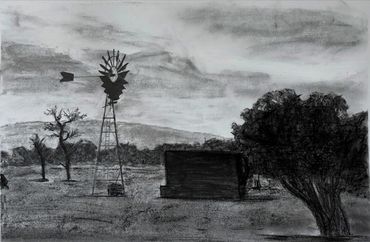
🎥 Charcoal Landscape Drawing
Watch on YouTube
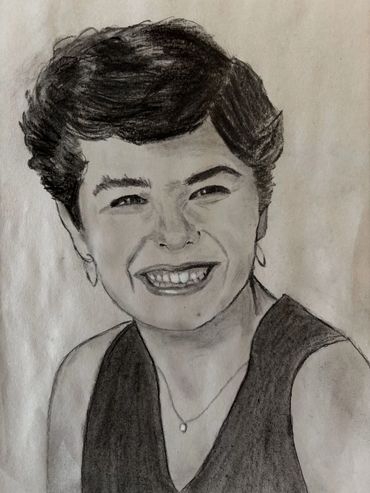
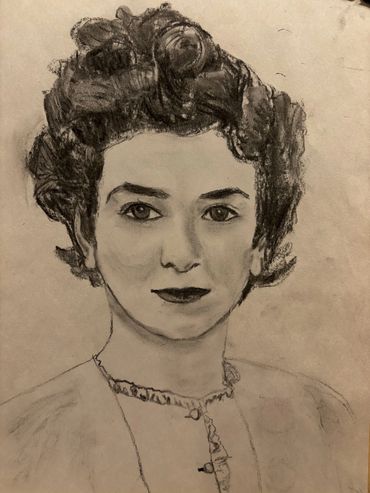
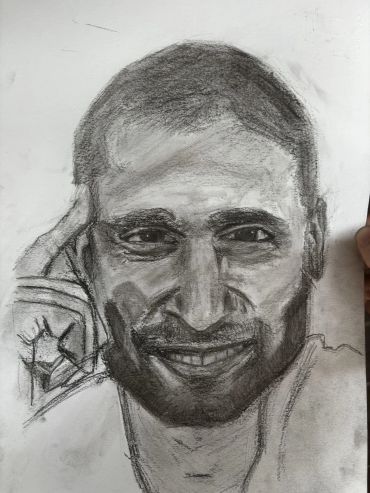
🎥 Charcoal Portrait Drawing
Watch on YouTube
💡 Creative Prompts to Try
Breathe and Draw: Inhale—draw a shape. Exhale—smudge it.
Feeling Map: Use different pressure, shape, and rhythm to represent your current emotion.
Nature Form: Draw a leaf, shell, or stone using both outline and shadow.
Self-Portrait: Not about likeness—try expressing how you feel in this moment using abstract marks.
Want to Share Your Shadows & Strokes
Tag us on Instagram @peacebypieceart or use the hashtag #PBPcharcoal to share your work and inspire others.